Ben Givens and Aidan Givens's Brotherhood
East of the MountainsBen Givens and Aidan Givens’s brotherhood grows out of a shared life of orchard labor and outdoor adventure, and becomes most visible when the Army’s draft threatens to separate them. Their bond is practical as well as intimate: they work the same land, learn the same country, and share the knowledge that the life they love may not be theirs to keep.
Brothers in the Orchard
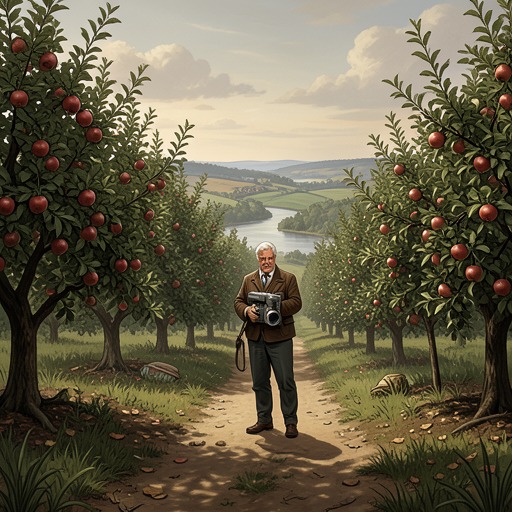
Aidan Givens is Ben Givens’s older brother by twenty months, and their childhood is rooted in the orchard their parents planted on the east bank of the Columbia River. The family’s land includes thirteen acres of Golden Delicious apples, two acres each of Winesaps and Rome Beauties, and eight acres of cherries and apricots. Poplars shelter the rows; irrigation ditches, leaning branch props, a hay-filled barn, a stable, and a farmhouse on a knoll make the orchard a working world rather than a pastoral abstraction. Its seasons and structures give the brothers a common ground in the most literal sense.
The brothers’ shared life is measured by recurring tasks. Ben Givens makes apple boxes, weeds the kitchen garden, splits wood, and milks cows; in spring, he and Aidan Givens help their father put out pollinating hives. When rain clogs the sluice gates with weeds, the brothers stand in the ditches and clear them by hand. Tree planting and removal, disking between rows, tying back young branches, thinning fruit, and propping limbs against the weight of apples fill out the year. Their intimacy is thus presented not as a string of declarations, but as a durable familiarity with work done side by side, in a place whose needs return with every season.
A Country They Explore Together
Beyond the orchard, the brothers take the dogs into the desert in search of quail, chukars, and sage grouse. When they can, they ride horses with their shotguns slung across their backs and canteens knocking against the saddles. On overnight trips they cook the birds over a twig fire, sometimes stuffing sage sprigs into the empty bodies before roasting them, then lie beneath the sky and talk. The landscape gives their companionship room for both activity and quiet: they pursue game, make camp, and share the long stillness after the meal.
Their shared appetite for the high country extends beyond hunting. In late fall, the family travels by train to Stevens Pass and walks open ridges toward unnamed summits. Ben Givens and Aidan Givens look out over forests whose density and reach feel foreign beside the sage country to the east, and imagine traveling for weeks into uncharted mountains. In Leavenworth they buy wooden skis with bent-metal toepieces and leather straps. Their mother teaches them to snowplow, turn, and stop; the brothers then ski winter slopes, climb uphill with skis on their shoulders, and attempt the amateur jump on Ski Hill Road, often falling. The repeated pattern is shared effort followed by a hard-won descent.
At Mission Peak, that closeness takes the form of attention to the same sudden event. As Ben Givens works his boots into their toe irons, Aidan Givens points out a mountain goat less than twenty yards away. It turns and vanishes behind an outcropping in a puff of snow. The moment is narrated through Ben’s response, but Aidan’s gesture makes the encounter shared: he notices, directs his brother’s gaze, and stands with him in the high, open landscape. The brothers’ adventures are not merely parallel experiences; they repeatedly depend on showing one another what is there.
A Last Ride Before the Draft
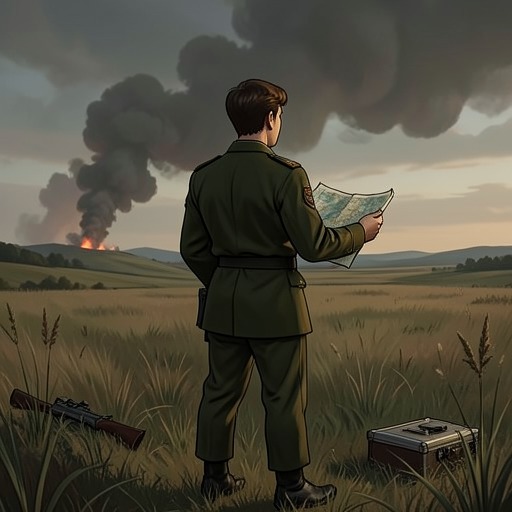
Fifteen months after the attack on Pearl Harbor, Aidan Givens is drafted into the Army. He packs three days before leaving and asks for one last ride in the Colockum Country. At dawn the brothers saddle their horses and cross the river at Coleman’s Landing. They ride through the day, eating at a spring and turning up Dry Springs Canyon; at dusk Aidan shoots two blue grouse, and they camp near Spring Gulch beneath hoary willows.
A thunderstorm passes over their tent during the night. When the rain finally stops, the brothers step out beneath a sliver of moon and a clearing sky. Aidan Givens tells Ben Givens that he does not want to go and admits that he does not feel suited to the Army; what he knows is apples, and he would rather stay on the land. His confession matters because it gives private words to the loss already gathering around the ride. Ben Givens answers that he wishes his brother were staying. The exchange does not undo the draft or offer a solution; its force lies in their ability to speak plainly to each other when neither can change what is coming.
They ride back to the Columbia River, cross on the Colockum Ferry, and reach the orchard at dusk, tired and hungry. They lead their horses between the rows in silence. As Aidan Givens passes, he runs his hands over the limbs; the branches tremble behind him. This final return makes the orchard more than the destination of the ride. The trees are the work and home he has just said he wants, and his passing touch turns the familiar rows into a scene of parting.
Shared Ground and Diverging Paths
The brothers’ closeness does not depend on identical temperaments or identical futures. Aidan Givens is described as sturdy, even-tempered, and amiable, while the scenes of the pair emphasize their common habits: working the ditches, ranging across the country, skiing, and finding their way home. The draft introduces a separation that the earlier routines could not prepare them to prevent. Aidan’s admission of fear and reluctance is entrusted to Ben Givens, making their trust clearest at the point when their shared daily life is about to break apart.
The high country also frames the possibility of a different path for Ben Givens. After Aidan Givens leaves, a letter from the president of the Leavenworth Ski Club urges Ben Givens to volunteer for the Army’s mountain troops rather than wait for the draft, appealing to his experience and enthusiasm for skiing. The letter does not establish what Ben decides, but it places his own relation to the mountains beside his brother’s forced departure. Their shared childhood has prepared them both for lives beyond the orchard even as Aidan’s last ride shows the cost of leaving it.
Later, Ben Givens passes working orchards during the October apple harvest: ladders disappear into the leaves, pickers fill bins, and fruit is eased down to avoid bruising. The landscape remains a place of demanding, collective labor, recognizably continuous with the world the brothers knew. Aidan’s departure gives that continuity a tender edge. Their bond is made from work, movement, and attention to country; the memory of those shared practices carries the weight of the separation without pretending that the brothers’ paths remain the same.